Home › Best Portable Power Stations Australia 2026
⚡ Updated October 2026
Best Portable Power Stations Australia 2026
By Carl Graham · Updated October 29, 2026 · 11 min read
Portable power stations have quietly replaced the generator for most Australian campers, caravanners and tradies. This guide compares eight models you can actually buy here today, with the capacity and output figures that decide whether your fridge runs or does not.
🔗 Affiliate Disclosure: ChargeWiseHub earns a commission from qualifying purchases at no extra cost to you. Learn more.
⚡ Top Picks at a Glance
🏆 Best Overall
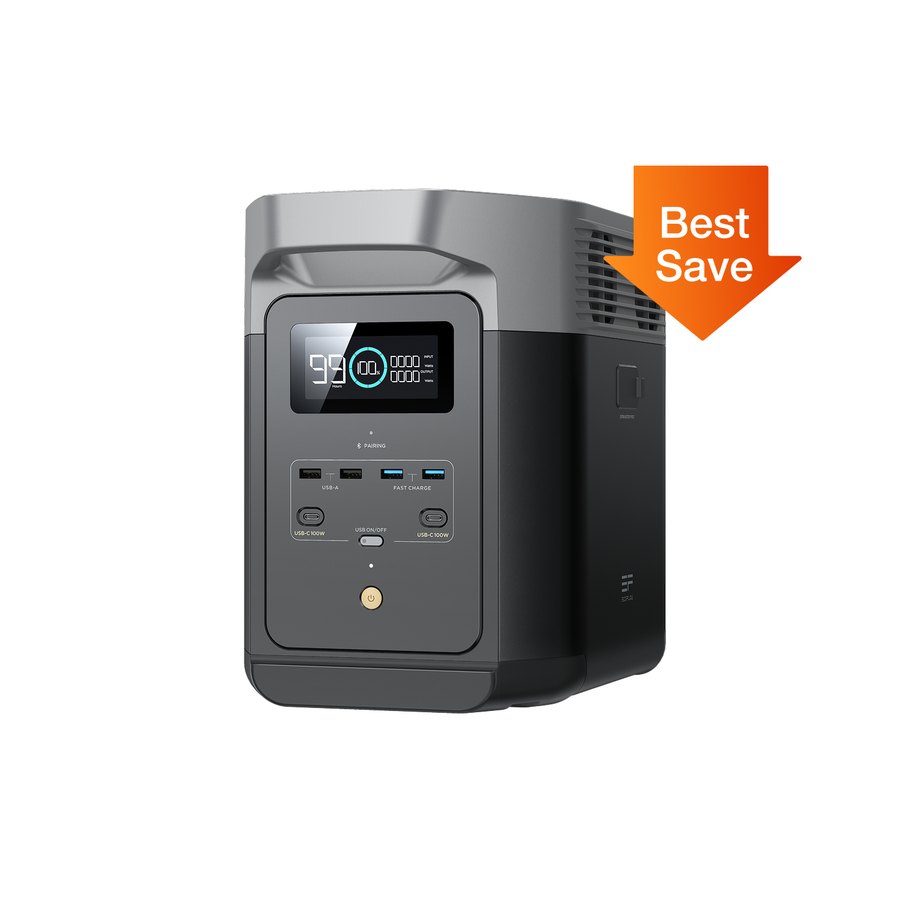
EcoFlow DELTA 2
1,024Wh, 1,800W output and a 5-year warranty. The safest all-rounder for a 4WD, caravan or home backup.
Every model below is currently sold in Australia by the brand's own Australian store. Prices and specs were checked on 29 October 2026. Prices move often, so treat these as the expected range rather than a fixed quote.
Power station
Capacity
AC output
Surge / boost
Weight
Price (AUD)
Best for
EcoFlow DELTA 2
1,024Wh
1,800W
X-Boost
~12kg
A$899
Best overall
Jackery 1000 v2
1,070Wh
1,500W
3,000W
10.8kg
A$699
Best value
EcoFlow DELTA 2 Max (1900)
1,900Wh
2,400W
3,100W X-Boost
~21kg
A$1,799
Caravan and fridge
BLUETTI Elite 100 V2
1,024Wh
1,800W
2,700W lifting
~11.3kg
A$999
9 ports, fast charge
BLUETTI Elite 200 V2
2,073.6Wh
2,600W
—
—
A$1,899
Big output, big capacity
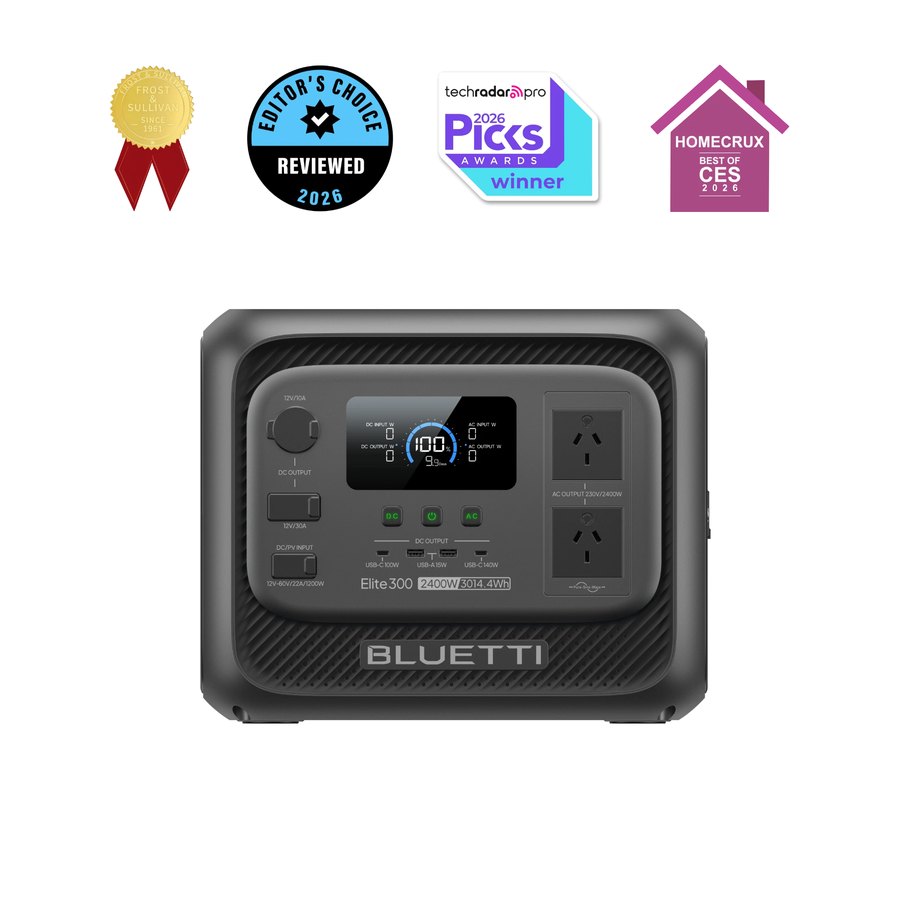
BLUETTI Elite 300
3,014Wh
2,400W
—
—
A$2,699
Home backup
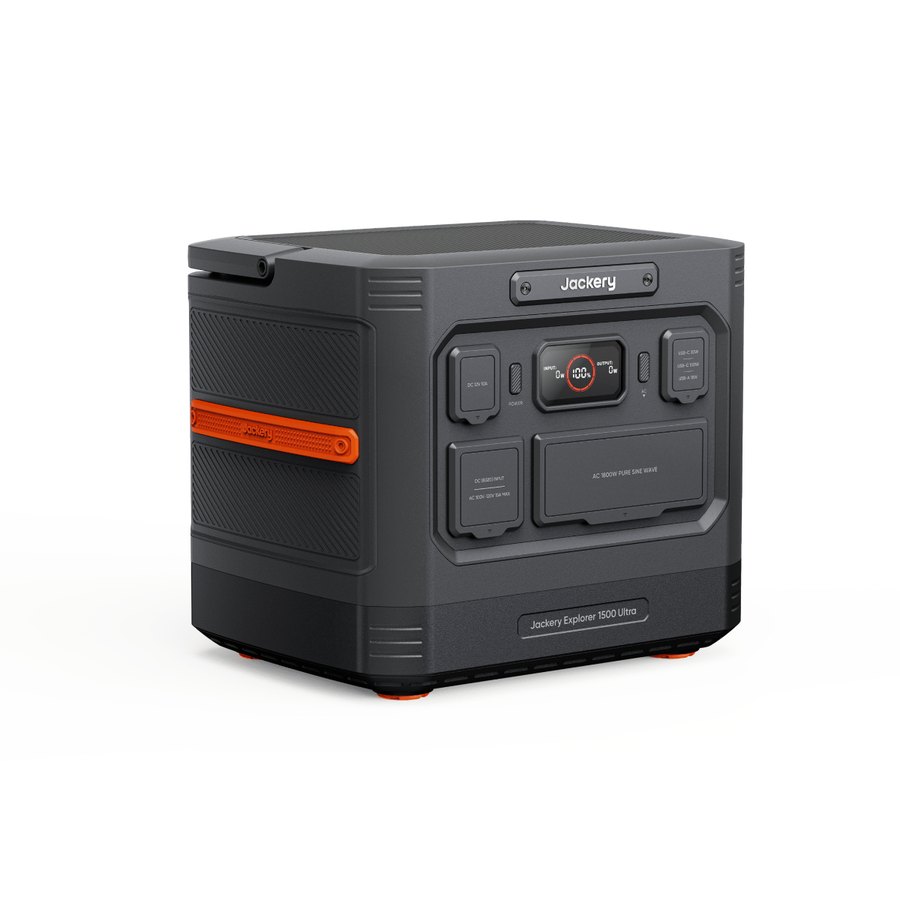
Jackery Explorer 1500 Ultra
1,536Wh
1,500W
—
—
A$1,549
Weatherproof
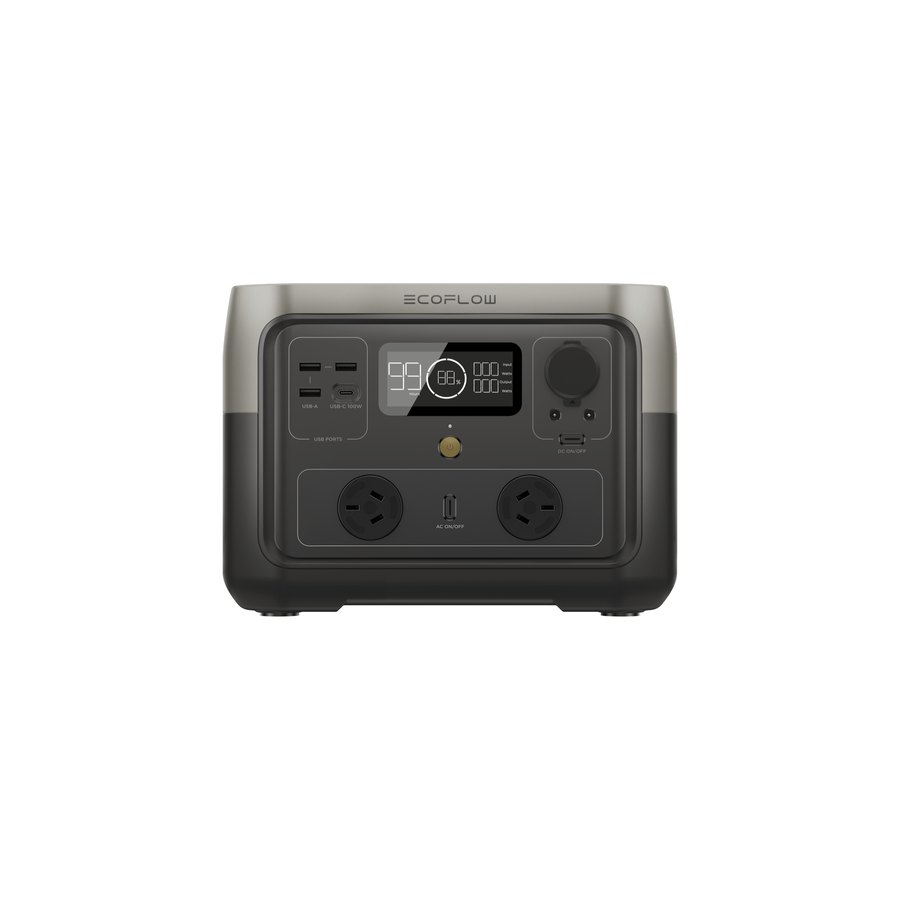
EcoFlow RIVER 2 Max
512Wh
500W
1,000W X-Boost
6kg
A$599
Compact
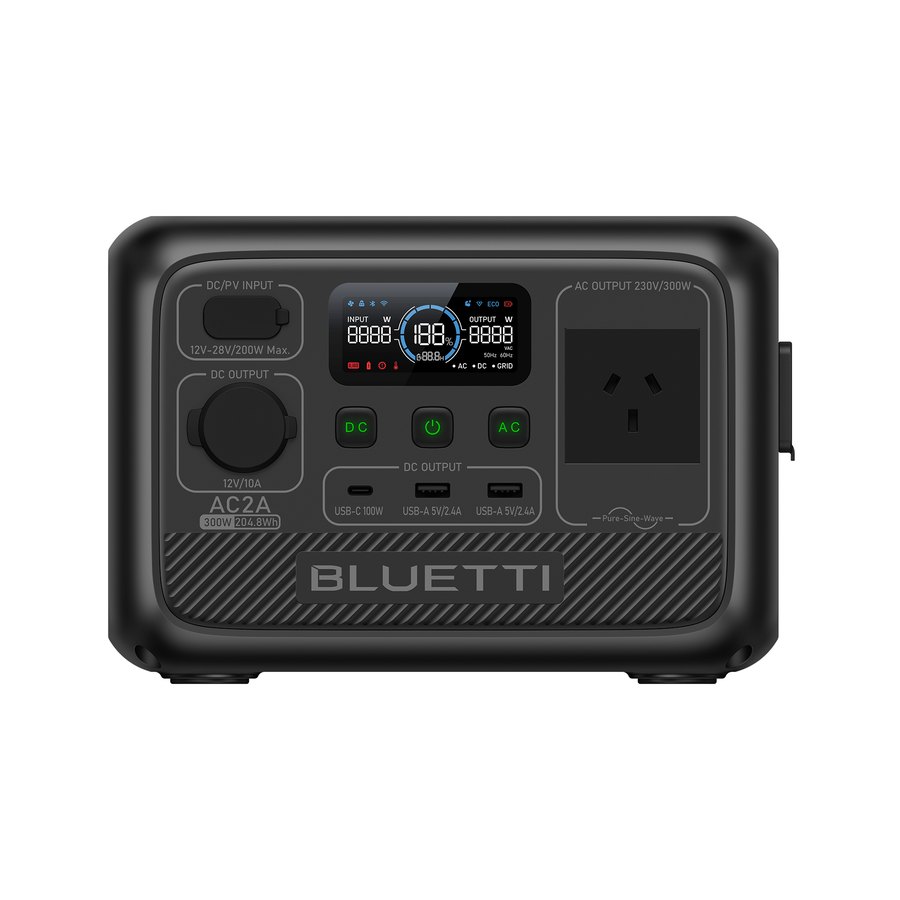
BLUETTI AC2A
204Wh
300W
600W
3.6kg
A$349
Budget and camping
Where a dash appears, the manufacturer does not publish that figure on the Australian product page, so we have not guessed it.
🔋 The Reviews
1. EcoFlow DELTA 2 Best Overall
Reviewed October 2026 · Specs from the manufacturer's Australian site
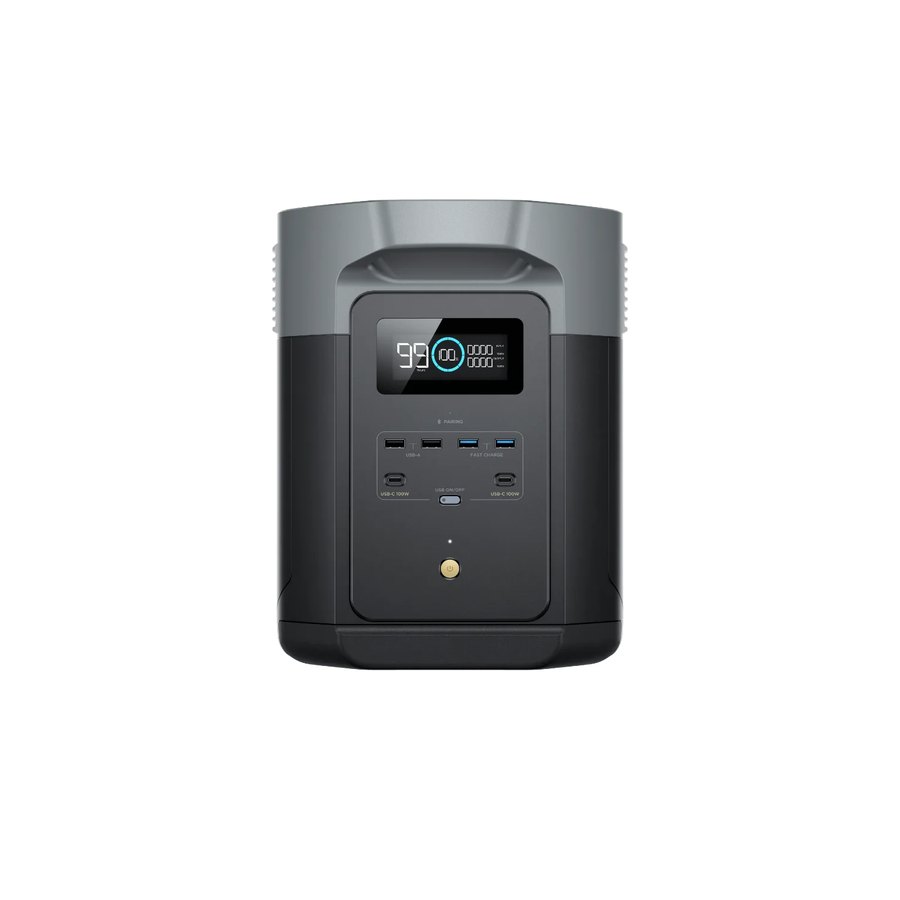
The DELTA 2 is the model we keep coming back to because nothing about it is a compromise. 1,024Wh of LiFePO4 storage, 1,800W of AC output, and EcoFlow backs it with a five-year warranty on the Australian store.
It will run a 240V bar fridge through the night, charge a drone and two laptops at once, and still start a caravan air conditioner if you accept the slower X-Boost behaviour. Recharging from a wall socket is quick enough that a smoko break brings it back to usable.
The catch: at around 12kg it is a two-hands lift, and the app leans on Wi-Fi for firmware updates. If you only ever charge phones, it is more machine than you need.
Who it suits: the person who wants one box that does the lot and does not want to think about wattage again.
Reviewed October 2026 · Specs from the manufacturer's Australian site
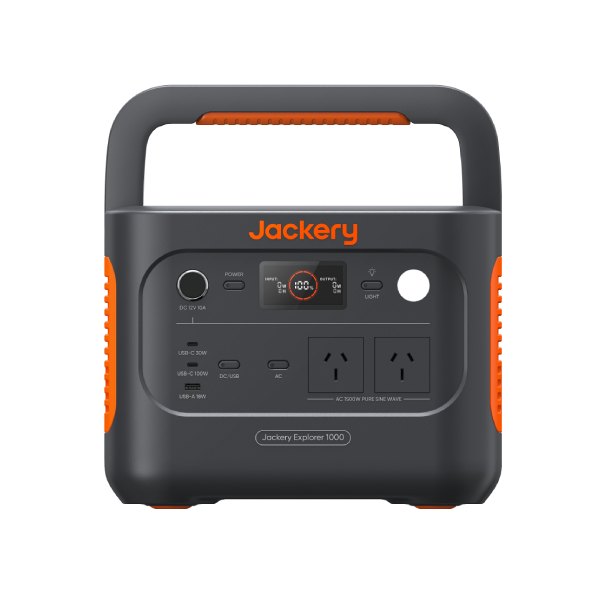
This is the value pick of the whole market right now. Jackery sells the Explorer 1000 v2 for A$699 with 1,070Wh of capacity, 1,500W continuous output, 3,000W surge and a 59-minute charge from empty to full.
Jackery quotes 4,000 cycles and up to ten years of daily use from the LiFePO4 pack, which is the longest claimed life of anything on this page. At 10.8kg it is one hand plus a bit, and the flat shape stacks in a ute tub without sliding about.
The catch: the 1,500W ceiling means kettles and induction cooktops are out unless you use the surge mode carefully. The app is basic compared with EcoFlow's.
Who it suits: anyone who wants maximum watt-hours per dollar and can live without the fancy extras.
3. EcoFlow DELTA 2 Max (1900) Best for Caravan and Fridge
Reviewed October 2026 · Specs from the manufacturer's Australian site
Caravan owners are the reason this model exists. 1,900Wh of capacity, four AC outlets, 3,100W of X-Boost headroom and a stated 3,000 cycles before the pack drops to 80%.
Four AC outlets matters more than it sounds: fridge, kettle, charger and a laptop all at once without a powerboard. The A$1,799 price is the entry point for the 1900 version; the standard DELTA 2 Max sits higher again.
The catch: it is heavy and it is not cheap. If your caravan already has a fixed lithium bank and an inverter, you are paying twice for the same job.
Who it suits: caravanners, campers with a 12V fridge, and anyone who wants one unit to cover a week off grid.
Reviewed October 2026 · Specs from the manufacturer's Australian site
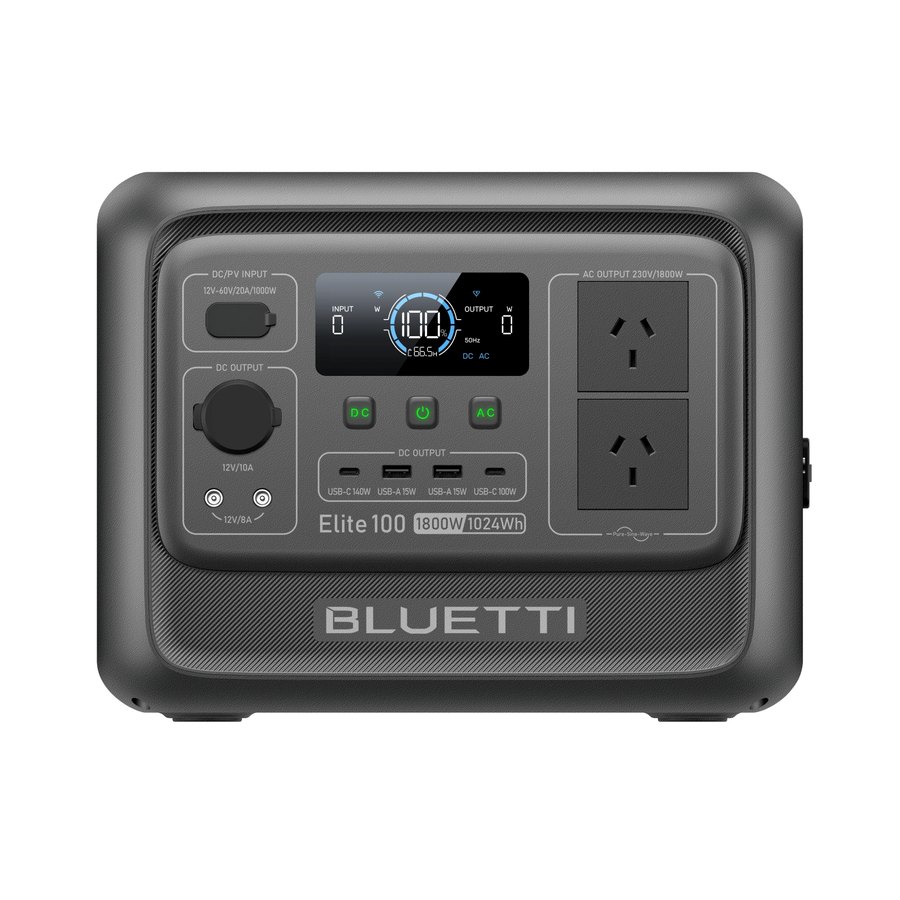
BLUETTI's Elite 100 V2 packs 1,024Wh into a 17-litre body weighing around 11kg, with a hidden handle that makes it genuinely carryable. Nine output ports is the most in this price bracket.
Two numbers stand out: 80% charge in 45 minutes on 1,200W AC input, and up to 1,000W of solar input for a full charge in about 70 minutes on a good array. For a tradie who wants to top up between jobs, that is the feature that matters.
The catch: A$999 puts it squarely against the DELTA 2 at A$899, so you are paying A$100 for faster charging and an extra port rather than more capacity.
Who it suits: people who charge in short bursts rather than overnight.
Reviewed October 2026 · Specs from the manufacturer's Australian site
512Wh and 500W in a 6kg box, with 1,000W of X-Boost and the quickest recharge in the River range at about an hour. This is the one you actually carry to the campsite rather than leave in the car.
It handles phones, cameras, a laptop, lights, a small fan and a CPAP machine comfortably. It will not run a bar fridge overnight, and that is the honest limit of a 512Wh pack.
The catch: 500W continuous is modest. Check the label on anything with a motor before you plug it in.
Who it suits: tent campers, weekend trips and small backup jobs.
Reviewed October 2026 · Specs from the manufacturer's Australian site
At A$349 the AC2A is the cheapest way into a decent LiFePO4 power station. 204Wh, 300W continuous, 600W surge, 3.6kg, and 3,000-plus cycles claimed.
It is a phone, laptop, light and small fan machine, and it does that job without fuss. The 45-minute charge to 80% is the same turbo charging BLUETTI uses up the range.
The catch: 204Wh is small. One laptop and a couple of phone charges and it is done. Do not buy it expecting to run appliances.
Who it suits: a first power station, a glovebox backup, or a gift for someone who just wants their phone to work when the power is out.
Reviewed October 2026 · Specs from the manufacturer's Australian site
Most power stations are fair-weather gear. The 1500 Ultra is built for the opposite: IP65 dust and water resistance, one-metre drop resistance and a quoted level 9 seismic rating, with 1,536Wh of LiFePO4 inside.
If it lives on a ute tray, in a trailer or on a dusty site, that sealing matters more than another 200Wh of capacity. Jackery also designed the cooling around a titanium-alloy structure with drainage at the base.
The catch: A$1,549 buys less capacity than the DELTA 2 Max at A$1,799, so you are paying a premium for the enclosure.
Who it suits: trades, farm use, boat owners and anyone whose gear gets rained on.
Reviewed October 2026 · Specs from the manufacturer's Australian site
3,014Wh and 2,400W. This is the size where a power station stops being camping gear and starts being a small home battery you can wheel out for an outage.
It will hold a fridge, a freezer, the TV, the modem and lights for a day, and recharge from solar or the grid afterwards. At A$2,699 it is cheaper than most dedicated home battery installations by a wide margin.
The catch: it is not a UPS for a whole house. Stove, hot water and air conditioning are still grid jobs.
Who it suits: anyone in a storm-prone area who wants the fridge to survive three days without power.
4WD touring with a dual battery setup. If you already run a DC-DC charger into an auxiliary battery, the power station is not there to replace it. It is there for the things that need 240V: a laptop, a camera charger, a coffee machine. A 512Wh unit like the RIVER 2 Max covers that easily and weighs 6kg. If you have no auxiliary battery, a 1kWh station plus a 200W folding panel is a cheaper path to the same outcome than a full dual-battery install.
Caravanning. A caravan with a fixed lithium bank and an inverter does not need a big power station. A small one covers the 240V odds and ends, and doubles as the blackout backup when the van is parked at home. A caravan without a fixed system should be looking at 1,900Wh or more, which is the DELTA 2 Max territory.
Tradie, ute or site work. The limiting factor is not capacity, it is dust and water. The Jackery 1500 Ultra with IP65 sealing is the only model on this page built for a tray in the weather. Accept that you are paying for the enclosure rather than watt-hours, and pair it with a generator for tools.
Home blackout backup. Work out one day of essential load first: fridge, freezer, modem, TV, lights, phone charging. For most Australian households that lands between 800Wh and 1,500Wh. Add 50% because you will want a second day, and because running a battery to zero shortens its life. That is why the 3,014Wh Elite 300 gets the nod for this job.
Camping and tent trips. Phones, a headlamp, a camera, a small fan, maybe a 12V fridge. A 200Wh to 600Wh unit is plenty and anything bigger is weight you will resent carrying.
📱 Apps, Monitoring and Firmware
All three major brands pair the station to a phone. It sounds like a gimmick until you use it.
EcoFlow has the most developed app: live input and output, per-port switching, charge speed limits, firmware updates, and scheduling. It is genuinely useful for a caravan because you can see what is drawing power without crawling behind the fridge.
BLUETTI is close behind, and adds a power memory mode on some models that resumes output automatically after an outage, which matters if the unit is running a fridge while you are away.
Jackery keeps it simpler. Basic monitoring, less configuration. If you are not a phone person, that is a feature, and the physical buttons work fine on their own.
One practical tip regardless of brand: connect the app once and check for firmware updates before your first trip. Several manufacturers have pushed updates that changed charging behaviour or fixed thermal limits, and a unit that has sat on a shelf for a year is likely running old software.
🎯 Which One Should You Actually Buy?
Skip the spec sheet and answer these three questions instead.
1. What is the biggest thing you need to run? Look at the label on the appliance and find the watts. A 240V bar fridge is usually 60-120W running. A laptop charger is 65-100W. A kettle is 1,500-2,400W and a caravan air conditioner can be 1,000W+. Buy for the biggest load, not the average one.
2. How long, and how often? If you need two hours of a 100W load, that is 200Wh of energy, and at roughly 85% inverter efficiency you need about 235Wh of battery. Most people over-buy capacity and under-buy output.
3. Where does it live? Caravans and sheds want big and heavy. Ute trays and tents want light. Sites and farms want sealed. That single answer eliminates half of this page.
If you want the short version: the Jackery Explorer 1000 v2 at A$699 is the best value in Australia today, and the EcoFlow DELTA 2 at A$899 is the one with the least to complain about over five years.
📐 How Much Capacity Do You Need? The Real Maths
Battery capacity is measured in watt-hours (Wh). One hour of a 100W load uses 100Wh. The catch is that converting battery power to 240V AC loses energy, so we use about 85% efficiency in the sums below.
What you are running
Typical draw
Hours you want
Battery needed (at 85% efficiency)
Phones and a tablet
20W
6 hours
~140Wh
Laptop and LED lights
100W
5 hours
~590Wh
50L 12V fridge (duty-cycled, ~30W average)
30W
24 hours
~850Wh
240V bar fridge
90W
12 hours
~1,270Wh
CPAP machine (no humidifier)
40W
8 hours
~375Wh
LED TV and modem
120W
6 hours
~850Wh
Caravan air conditioner
900W
3 hours
~3,180Wh
Two rules of thumb that save people money:
Buy for peak watts, size for watt-hours. A station that cannot start your fridge at all is useless no matter how big the battery is.
Plan for 80% depth of discharge. Running a battery flat every day shortens its life. If you need 850Wh a day, buy 1,000Wh or more, not exactly 850Wh.
🔍 What the Numbers on the Box Actually Mean
Wh (watt-hours) is the fuel tank. This decides how long things run.
W (watts, continuous) is the size of the tap. This decides what you can plug in at all.
Surge or peak watts is a short burst, usually one to three seconds, for motors starting up. Fridges and air compressors need it. Do not treat surge as continuous capacity.
X-Boost and Power Lifting are marketing names for the same trick: the station lowers output voltage so it can limp along a resistive load above its rating. A 1,000W station running a 1,500W kettle this way will heat it more slowly, and some appliances refuse to play along. It is a fallback, not a free upgrade.
Cycle life counts full discharges. 3,000 cycles to 80% capacity, used once a week, is roughly 57 years of use. Used once a day, about eight years. Nearly every LiFePO4 station sold in Australia now claims 3,000 to 4,000 cycles.
🛒 Where to Buy and What to Watch
Buy from the brand's Australian store or an Australian retailer (BCF, Anaconda, Bunnings marketplace, Amazon AU) and you get the Australian 240V socket, Australian warranty and Australian support. A cheap import with a 120V socket and a US plug is not a bargain, it is a paperweight for anything with a motor.
Prices on these models swing by 15-25% across sale events. The 1,070Wh Jackery at A$699 is the clearest example of a model currently sitting well under its usual price, so if you see a similar gap on the DELTA 2, take it.
Check three things before you pay: the warranty length in writing, whether the seller is an authorised Australian dealer, and whether the model number matches what you researched. Grey imports sometimes carry a near-identical name with a different socket.
❓ Frequently Asked Questions
What size power station do I need for a caravan?
For a caravan running a 12V compressor fridge, lights, phones and a laptop, plan on 1,500Wh to 2,000Wh to cover a day and recharge overnight. If you are running a 240V air conditioner as well, you are looking at 3,000Wh or more, or a fixed lithium system instead.
Can a portable power station run a fridge?
Yes, if the continuous output is above the fridge startup draw. A typical bar fridge needs about 90W running but can spike three to five times that on start. Choose a station with a surge rating comfortably above that spike.
How long will a power station last?
Most LiFePO4 models sold in Australia now claim 3,000 to 4,000 cycles before dropping to 80% capacity. Daily use gives roughly eight to ten years. Stored between 50% and 80% in a cool spot, they often outlast their warranty.
Are power stations safe to use indoors?
Yes. A battery power station has no exhaust and produces no carbon monoxide, so it can run inside a house, caravan or tent. A petrol generator cannot, and should only ever run outdoors, well away from windows and doors.
Do I need an electrician to use one?
No. Plug and play through a normal 240V socket. Only fixed wiring, like hardwiring an inverter or a transfer switch into your switchboard, needs a licensed electrician.
Can I charge a power station from my car?
Yes, most models accept a 12V car lead, but car charging is slow, often 100W to 200W. Check whether the model you are buying includes the car cable or sells it separately.
Will it run my welder or air compressor?
No. Power tools with inductive motors draw far more than their label during startup and will trip most portable stations. For site work, a generator is still the right tool.
Why do prices change so often?
Power stations are sold on constant promotional cycles across brand stores and retailers. A model can move 20% in a fortnight. Compare the current price against its usual price rather than trusting a discount badge.