🔋 The Picks in Detail
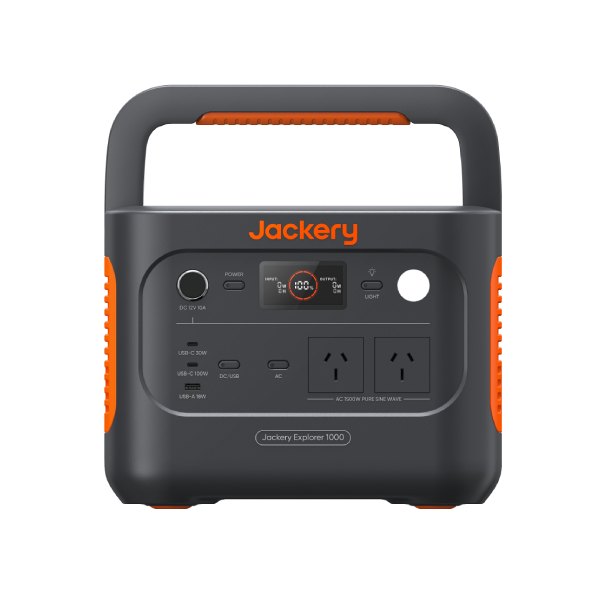
1. Jackery Explorer 1000 v2 Best Overall Under A$1,000
At A$699 for 1,070Wh, this is the model that makes the rest of the band look expensive. Jackery quotes 4,000 cycles, a 59-minute full charge and 1,500W continuous output with 3,000W of surge.
It weighs 10.8kg, has dual 100W USB-C ports, and switches to UPS mode in 20 milliseconds, which means it can sit under a desk and keep a computer alive through a brownout.
Trade-off: no expandable battery, and the 1,500W ceiling rules out kettles and induction cooking.
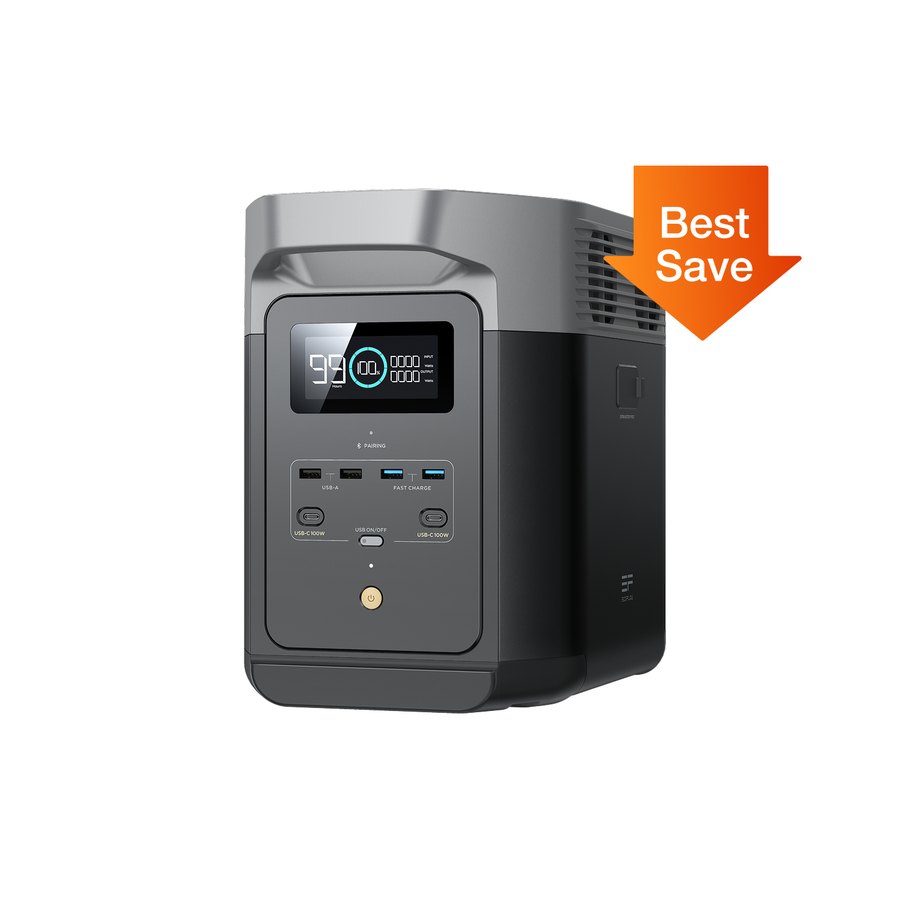
2. EcoFlow DELTA 2 Best Output
1,800W continuous is the number that separates the DELTA 2 from everything else near its price. It runs a circular saw, a microwave or most caravan appliances where a 1,000W station would trip.
The five-year warranty on the Australian store is the longest standard cover in this group, and the LiFePO4 pack is rated to 3,000 cycles to 80%.
Trade-off: heavier than the Jackery and A$200 more for slightly less capacity, so you are paying for output and warranty, not litres of battery.
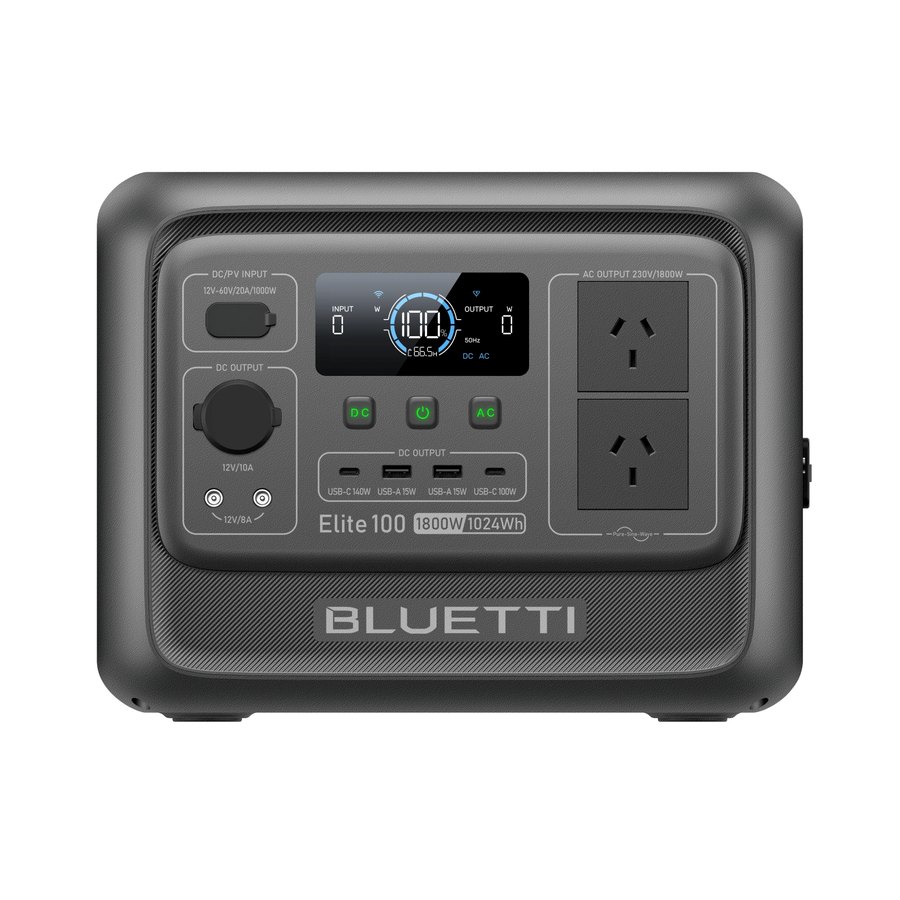
3. BLUETTI Elite 100 V2 Best Charging Speed
Nine ports and a 45-minute charge to 80% on 1,200W of AC input. If your routine is a lunch break at a servo rather than an overnight charge, this is the one.
BLUETTI also rates the solar input up to 1,000W, which is enough to fully recharge off two decent panels in about 70 minutes of good sun.
Trade-off: A$999 is the top of this band and buys the same 1,024Wh as the DELTA 2.
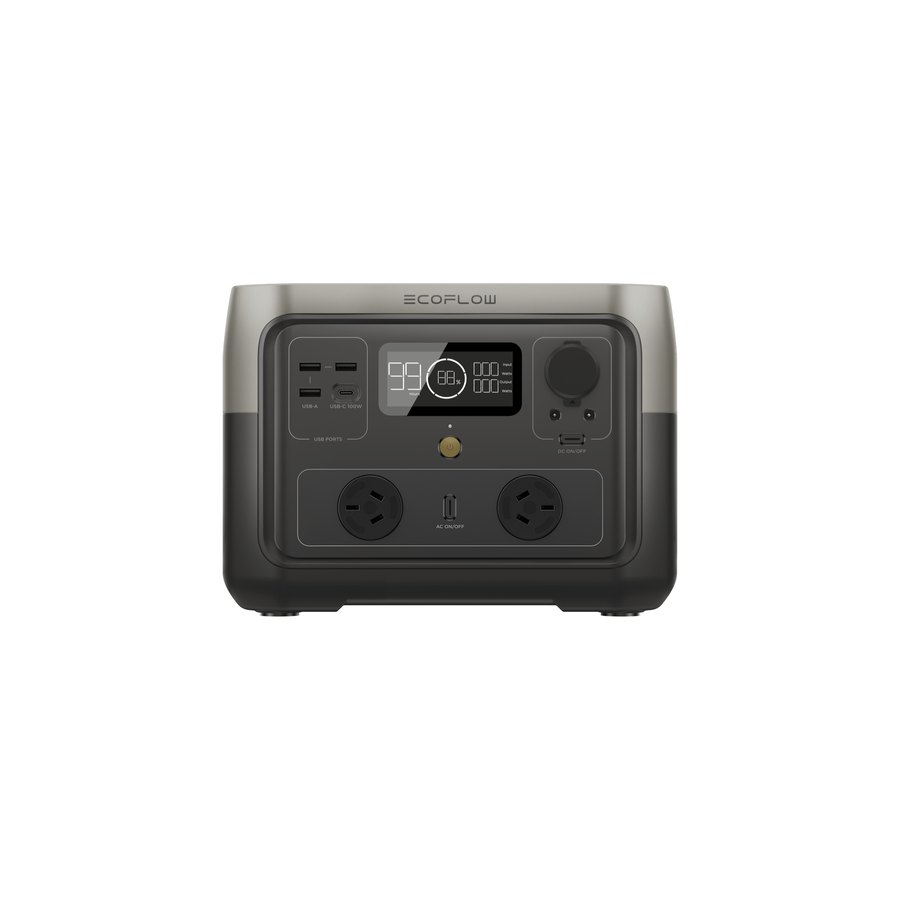
4. EcoFlow RIVER 2 Max Best Compact
512Wh and 500W at 6kg, with about an hour to full charge. This is the model you carry rather than wheel.
Two AC outlets, 1,000W of X-Boost for short bursts, and a genuinely usable size for a weekend tent trip or a ute glovebox.
Trade-off: 512Wh will not carry a fridge overnight. Know that going in.
5. Jackery Explorer 600 v2 Best Lightweight 600Wh
640Wh, 500W with 1,000W surge, and six ports including two 100W USB-C. Jackery calls it the lightest 600Wh-class LFP station and it feels like it.
It handles phones, laptops, a small fan, lights and a camera battery bank without strain, and the UPS switchover is quick enough for a desktop computer.
Trade-off: at A$549 it is close to the 1,070Wh Jackery on price. Unless weight is the deciding factor, the bigger model is better value.
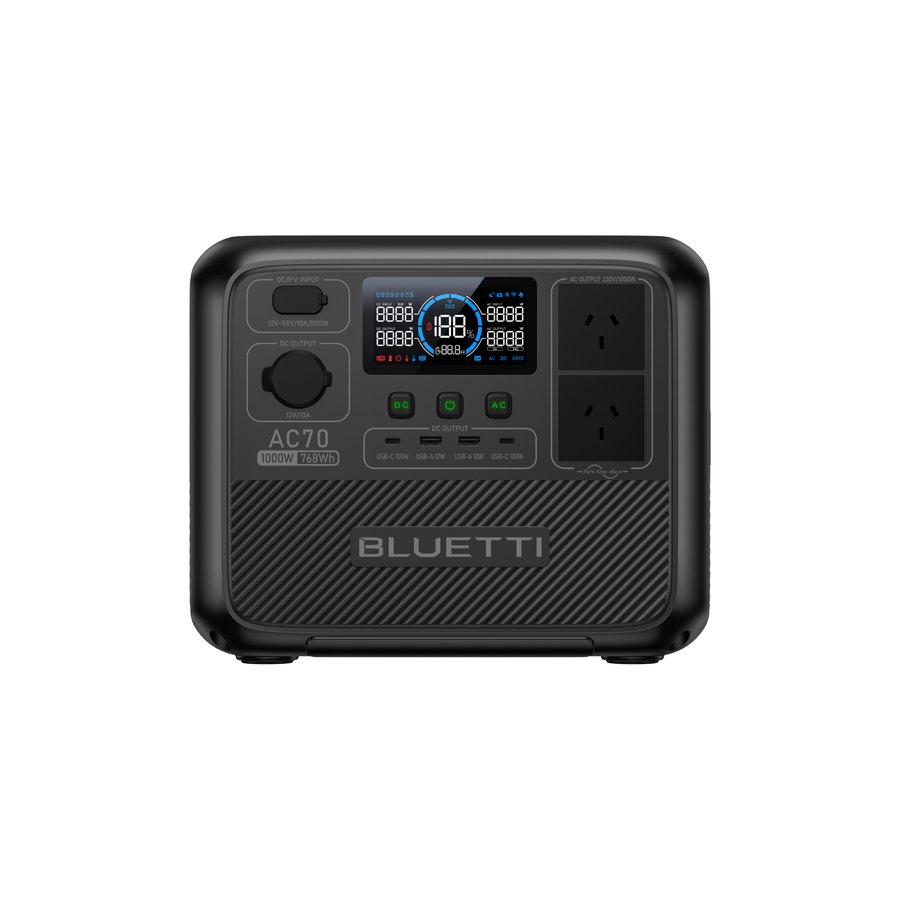
6. BLUETTI AC70 Best Mid-Size BLUETTI
768Wh and 1,000W in a 10kg body, with turbo AC charging and BLUETTI's app control. It sits in the gap between the compact units and the 1kWh class.
Two AC outlets and a decent spread of USB and 12V ports makes it a practical caravan companion for lights, laptops and a small fridge.
Trade-off: A$899 for 768Wh is poor value against the 1,070Wh Jackery at A$699. Buy it only if you want the BLUETTI app ecosystem.
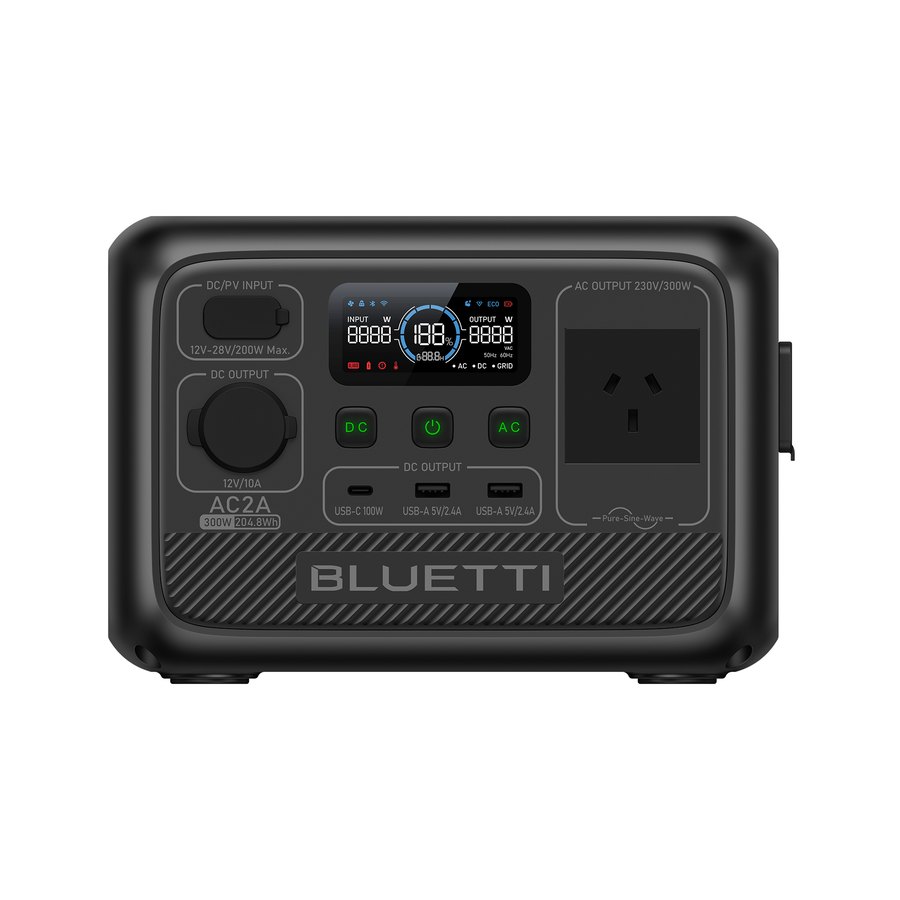
7. BLUETTI AC2A Best Budget
204Wh, 300W, 3.6kg and A$349. It charges to 80% in 45 minutes and claims 3,000-plus cycles.
This is the model for keeping phones, a laptop and a couple of lights going during an outage or a night in the swag.
Trade-off: tiny capacity. If you want to run any appliance with a motor, this is not the unit.
8. EcoFlow RIVER 2 Cheapest Reliable Option
256Wh and 300W for A$299, with LiFePO4 cells and a one-hour charge. It is the cheapest station here from a brand with Australian support.
Small, light and honest about what it is: a phone, laptop and lighting box.
Trade-off: 256Wh goes quickly. Treat it as a large power bank with a 240V socket.